
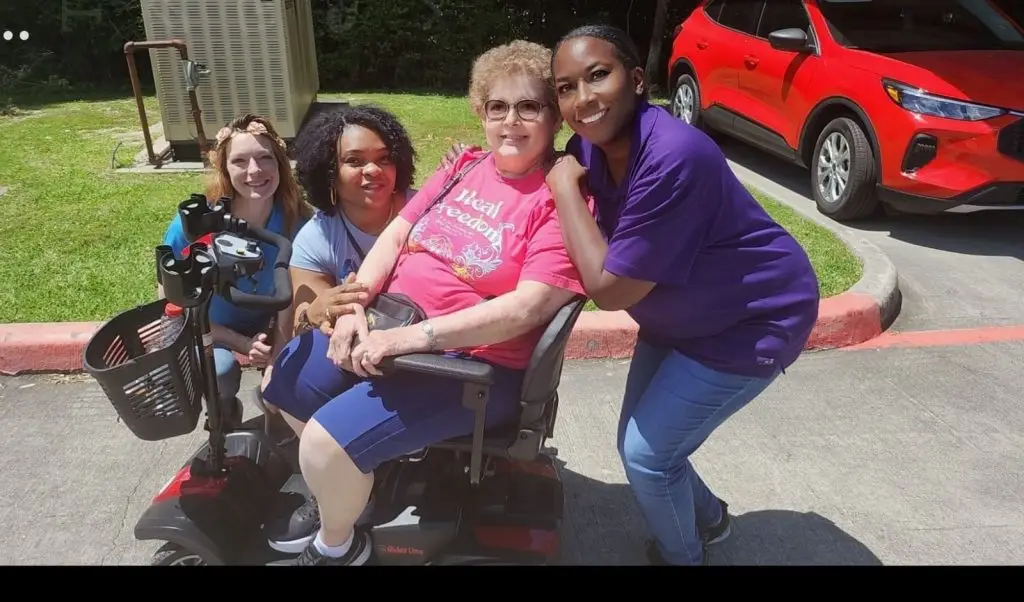
Giving up driving is one of the hardest transitions of later life. It is rarely just about the car — it is about spontaneity, independence and the ability to go where you want without asking anyone. Our transportation and escort service is designed to give as much of that freedom back as possible, with a caregiver who accompanies your relative door to door rather than simply dropping them off.
Where We Take People
- Medical appointments — doctors, specialists, dentists, opticians, physical therapy and follow-ups.
- Pharmacy visits — collecting prescriptions and picking up supplies.
- Grocery shopping and errands — with help managing the trolley and carrying bags home.
- Banking and personal admin — trips that are easier with someone alongside.
- Places of worship — maintaining a routine that often matters enormously.
- Hair and personal appointments — the ordinary things that keep people feeling like themselves.
- Social visits and outings — seeing friends and family, or simply a change of scene.
Escort Service: More Than a Lift
The difference between transport and an escort service matters most at medical appointments. A caregiver who stays with your relative can:
- Help them into the building and to the right department.
- Wait with them, so no one is left sitting alone and anxious.
- Take notes on what was said, if your relative wants that.
- Help gather instructions, prescriptions and follow-up dates.
- Collect any medication on the way home.
- Report back to you, so nothing is lost in translation.
Anyone who has left an appointment unsure what was actually decided will recognise how much difference a second pair of ears makes.
Safety and Comfort
- Door-to-door support. From the front door to the destination and all the way back.
- Unhurried pace. Time to get in and out of the vehicle safely, without feeling rushed.
- Mobility awareness. Support for walkers, sticks and unsteadiness.
- A familiar caregiver. Ideally the same person who provides other support at home.
- Planning ahead. Appointment times, parking and access considered in advance.
Why It Matters for Independence
When transport disappears, life narrows quickly. Appointments get postponed, shopping becomes a burden on family, social contact fades and confidence follows. Reliable transportation reverses much of that — often it is the single service that has the biggest effect on someone’s quality of life, because it restores access to everything else.
It also relieves pressure on family. If you have been taking time off work for every appointment, or driving across town at short notice, a scheduled service makes life more predictable for everyone.
Covering Kingwood and the Surrounding Area
We provide transportation throughout Kingwood, Humble, Spring, Crosby, Huffman and Porter. Being local means our caregivers know the routes, the clinics and the parking — small details that make appointment days far less stressful.
When Driving Stops Being the Safe Option
Very few people decide to stop driving in a single moment. It usually happens through a series of quiet adjustments — no longer driving after dark, avoiding the freeway, taking longer routes to dodge difficult junctions. Families often notice these changes before the conversation is ever had.
Signs that driving may be becoming unsafe include new scrapes on the car, getting lost on familiar routes, slower reactions at junctions, difficulty judging gaps in traffic, or increasing anxiety about journeys that used to be routine. Medication side effects, reduced vision and stiffness in the neck and shoulders all contribute.
What makes the conversation so difficult is not the driving itself but everything attached to it. Stopping can feel like the end of independence. Having a reliable alternative already in place changes that conversation completely: the question becomes how your relative will get around, not whether they still can.
Planning an Appointment Day
Medical appointments are the trips that cause families the most stress, and a little planning removes most of it. A well-organised appointment day usually looks like this:
- Confirm the details in advance — time, location, department, and whether anything needs preparing beforehand.
- Allow generous time. Rushing an older adult is the fastest way to make a day stressful and unsafe.
- Gather what is needed — identification, insurance details, a current list of medication, glasses, hearing aids and any paperwork.
- Travel together, door to door. The caregiver assists from the front door to the department, not just to the entrance.
- Stay for the appointment if your relative wants that, and note down what was said.
- Handle the follow-ups — book the next appointment, collect prescriptions, and pick up anything needed on the way home.
- Settle back in at home, with a drink and a meal if the trip was a long one, and an update passed on to you.
Keeping Ordinary Life Going
It would be a mistake to think of transportation purely in medical terms. The trips that matter most to quality of life are often the ordinary ones — choosing your own groceries rather than receiving someone else’s choices, keeping a standing hair appointment, attending a regular service, or visiting a friend you have known for fifty years.
These outings are what stop a week from shrinking to the four walls of a house. They preserve routine, identity and the sense of still participating in the world. We treat a trip to a garden centre as no less legitimate than a trip to a clinic.
Practical Points Worth Knowing
- Tell us about mobility needs upfront — walkers, sticks, wheelchairs or difficulty with steps — so the right arrangements are made before the day.
- Longer trips need more notice. Local errands are easier to arrange at short notice than a lengthy hospital visit.
- Combine trips where it makes sense. Pharmacy and groceries on the same outing means one journey rather than two.
- Regular commitments can be scheduled. A weekly service or a standing appointment can simply become part of the routine.
- Tell us about preferences. Preferred shops, familiar routes and a favourite café all make a trip more enjoyable.
One Caregiver, Several Kinds of Help
Transportation works best when it is not treated in isolation. Because the same caregiver can also provide personal assistance, companionship, meal preparation and housekeeping, a single visit can cover getting ready in the morning, travelling to an appointment, collecting a prescription and returning home for lunch. Your relative deals with one familiar person throughout, which is less tiring and considerably more reassuring than a series of separate visitors.
Frequently Asked Questions
Does the caregiver stay during the appointment?
Yes, if that is what you want. Some clients prefer their caregiver to wait in the waiting area; others want them in the room to help remember instructions. Your relative decides, and we follow their preference.
How far in advance do we need to book?
As much notice as you can give helps us schedule the right caregiver, particularly for longer trips. That said, we understand appointments are sometimes arranged at short notice — call 832 552 5836 and we will do our best.
Can you help with a wheelchair or walker?
Tell us about mobility needs when you arrange the trip, including any equipment used, and we will confirm what we can accommodate so there are no surprises on the day.
Can transportation be combined with other services?
Yes, and this is usually the most practical arrangement — a caregiver might help your relative get ready in the morning, take them to an appointment, collect a prescription and prepare lunch afterwards, all in one visit.
Is this only for medical appointments?
Not at all. Groceries, the bank, a place of worship, a haircut or visiting a friend are all equally valid reasons. Maintaining an ordinary social life is exactly the point.
Arrange Transportation Support
If getting out and about has become difficult, we can help. Call 832 552 5836, email compassitant@gmail.com, or complete our client inquiry form and we will be in touch to talk it through.